
Best practice guidelines for competitor installation
In GT and touring cars, as well as rally, rallycross and cross country cars, it is essential that drivers and co-drivers are positioned correctly in the seat, as this can play a key role in preventing injuries during...
Dear Colleagues,
In GT and touring cars, as well as rally, rallycross and cross country cars, it is essential that drivers and co-drivers are positioned correctly in the seat, as this can play a key role in preventing injuries during serious accidents.
To ensure that seats provide the most strength and support, competitors should follow the best practice for installation of seats homologated to FIA Standards.
We encourage you to share this information with your technical delegates, scrutineers and competitors.
To assist you we have provided the following post for your social media channels (along with this image) so that your motor sport communities are aware of this important information:
In racing and rallying it is essential that competitors are positioned correctly in the seat, as this can prevent injuries during serious accidents. You can find the best practice guidelines for competitor installation here: bit.ly/competitorinstall
#FIAVisionZero
We have also drafted the following article, which we encourage you to publish on your websites, magazines and newsletters, along with these images.
FIA Calls for Drivers and Co-Drivers to Check Seat Position to Prevent Injury
The FIA is calling for drivers in GT and touring cars, as well as rally, rallycross and cross country cars, to always check they are positioned correctly in the seat, as this can play a key role in preventing injuries during serious accidents.
To ensure that seats provide the most strength and support, competitors should follow the best practice for installation of seats homologated to FIA Standards.
When seated in racing position, the pelvis, shoulders, and head must be supported comfortably by the seat by following these three steps:
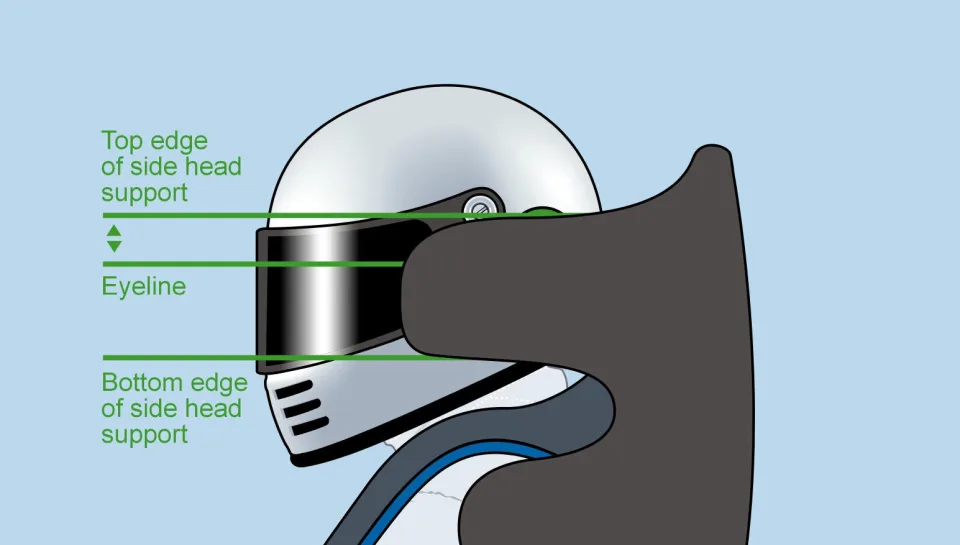
1. Eye line must be below the top edge of the side head support, and above the bottom edge of the side head support.
2. Shoulders must fit within the side shoulder support of the seat.
3. Pelvis must be adequately supported by the side pelvis support.
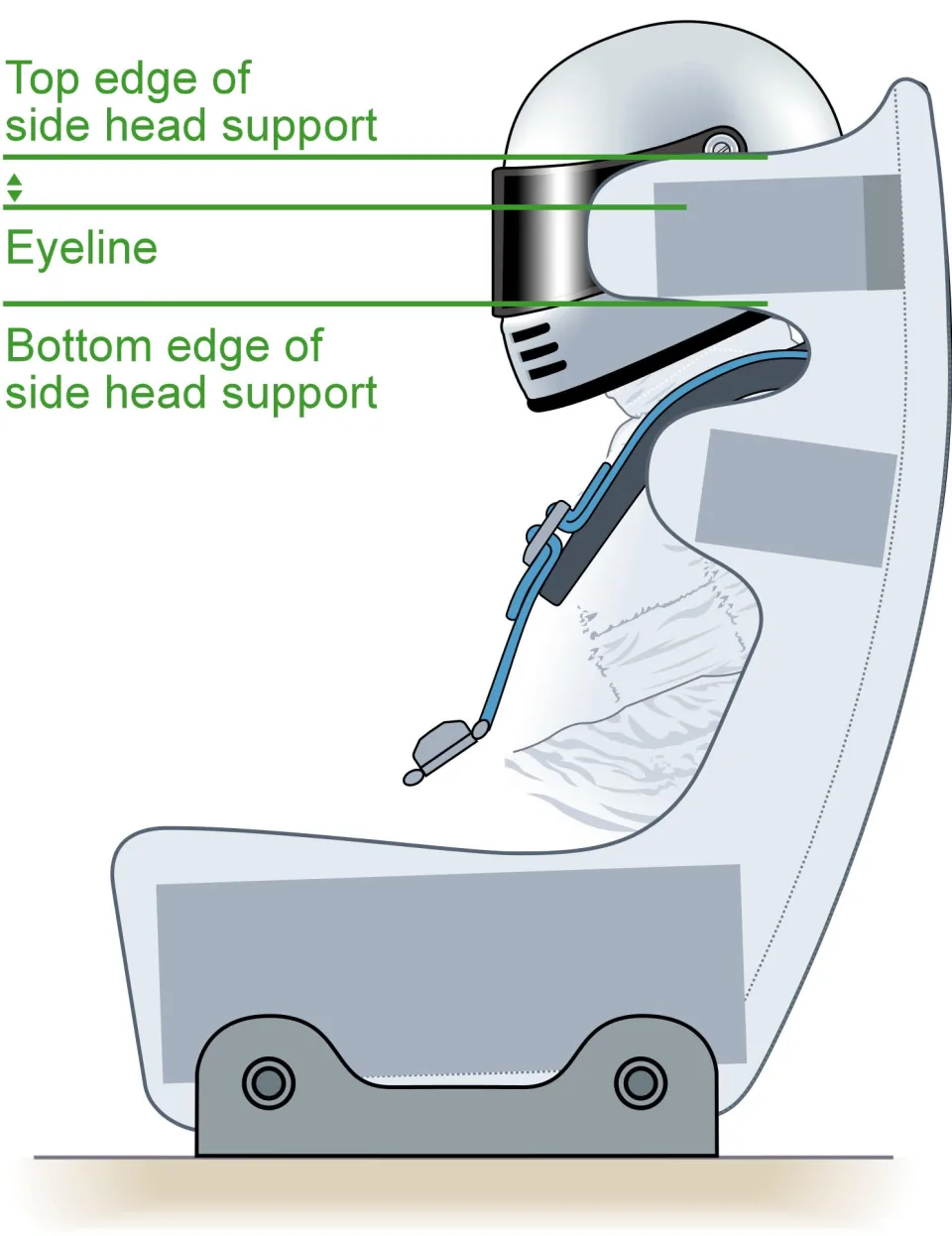
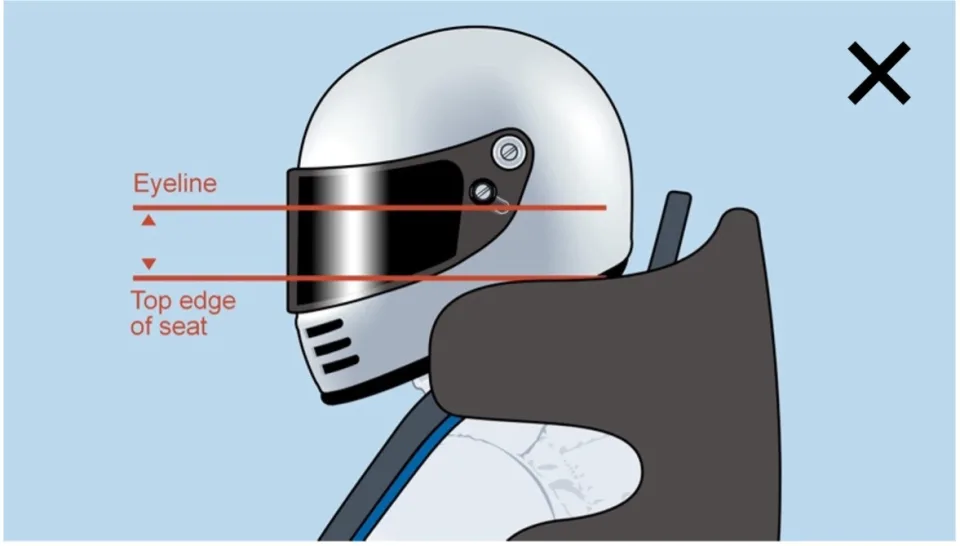
If the driver’s helmet is too high in relation to the seat head support, the seat may not provide lateral and rear support to the helmet in the event of a crash.
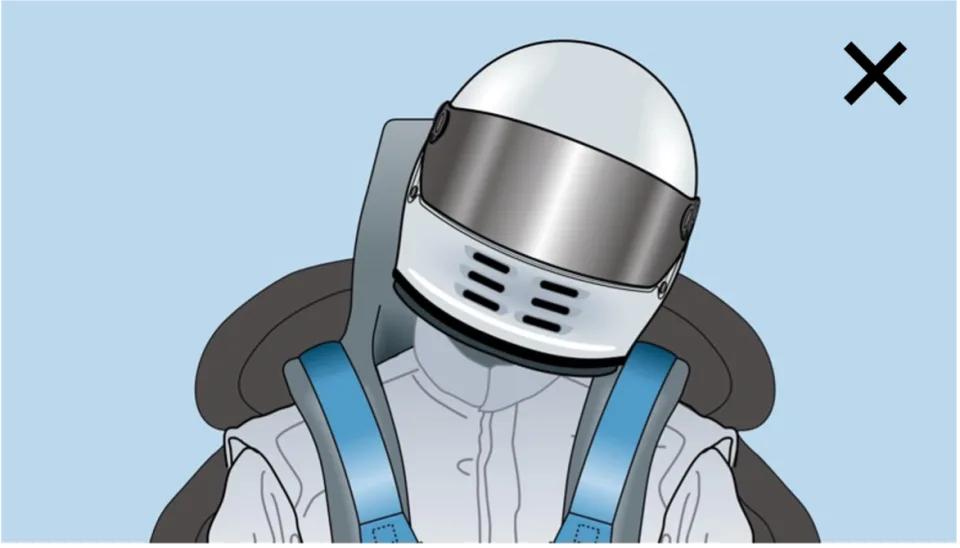

The FIA has warned that officials can deny participation in a competition if the driver and/or co-driver are not seated in the correct position, through checking compliance with the FIA International Sporting Code under Appendix J (Articles 253.16.1.1 and 283.20.1.1), which regulates the seating position as described above.
FIA Safety Director Adam Baker: “Real-world accident cases highlight the importance of competitor installation in the cockpit for the prevention of serious injury. We are encouraging drivers and co-drivers worldwide to follow these steps to ensure the correct seating position.”
Best regards,
FIA Safety Department
Chers collègues,
Qu’il s’agisse des voitures GT et de tourisme ou des voitures de rallye, de rallycross et de rallye tout-terrain, il est essentiel que les pilotes et les copilotes soient correctement positionnés dans leur siège, car cela peut jouer un rôle clé dans la prévention des blessures lors d’accidents graves.
Pour s’assurer que les sièges offrent la meilleure résistance et le meilleur soutien possibles, les concurrents doivent suivre les instructions d’installation des sièges homologués selon les normes de la FIA.
Nous vous encourageons à partager ces informations avec vos délégués techniques, vos commissaires techniques et vos concurrents.
Afin de vous aider dans cette démarche, nous avons préparé le message suivant à diffuser sur vos canaux de médias sociaux (accompagné de l’image ci-jointe) à l’attention de vos communautés de sport automobile :
Dans les courses et les rallyes, il est essentiel que les concurrents soient positionnés correctement dans leur siège, car cela peut éviter les blessures lors d’accidents graves. Voici les meilleures pratiques en matière d’installation: bit.ly/competitorinstall
#FIAVisionZero
Nous avons également rédigé l’article suivant, que nous vous encourageons à publier sur vos sites web, magazines et newsletters, accompagné des images ci-jointe.
La FIA appelle les pilotes et copilotes à vérifier leur position dans leur siège pour éviter les blessures
La FIA appelle les pilotes de voitures GT et de tourisme, ainsi que de voitures de rallye, de rallycross et de rallye tout-terrain, à toujours vérifier qu’ils sont correctement positionnés dans leur siège, car cela peut jouer un rôle clé dans la prévention des blessures lors d’accidents.
Pour s’assurer que les sièges offrent la meilleure résistance et le meilleur soutien possibles, les concurrents doivent suivre les instructions d’installation des sièges homologués selon les normes de la FIA.
Lorsque les pilotes sont assis en position de course, le bassin, les épaules et la tête doivent être soutenus confortablement par le siège conformément à ces trois critères :
1. La ligne du regard doit se situer en dessous du bord supérieur de l’appui-tête latéral, et au-dessus du bord inférieur de l’appui-tête latéral.
2. Les épaules doivent s’adapter à l’appui latéral du siège.
3. Le bassin doit être correctement soutenu par le support latéral de bassin.
Si le casque du pilote est trop haut par rapport à l’appui-tête du siège, le siège risque de ne pas assurer le soutien latéral et arrière du casque en cas d’accident.
La FIA a fait savoir que les officiels peuvent refuser la participation à une compétition s’ils constatent que le pilote et/ou le copilote ne sont pas correctement assis, après vérification de la conformité avec l’Annexe J du Code Sportif International de la FIA (Articles 253.16.1.1 et 283.20.1.1), qui réglemente la position assise telle que décrite ci-dessus.
Adam Baker, Directeur de la Sécurité de la FIA : "Les cas d’accidents réels soulignent l’importance de l’installation des concurrents dans l’habitacle pour la prévention des blessures graves. Nous encourageons les pilotes et copilotes du monde entier à suivre ces étapes pour assurer une position assise correcte."
Bien cordialement,
Le Département de la Sécurité de la FIA
Si vous souhaitez que nous abordions certains sujets dans les prochains bulletins, veuillez envoyer vos suggestions à l’adresse suivante : safety@fia.com.